

Elizabeth Hidson - Chair of TPEA
Dr Elizabeth Hidson SFHEA is a Senior Lecturer in Professional Development and International Education at the University of Sunderland, where she is Programme Leader for the MA in International Education (Distance Learning) and REF UoA23 (Education) Coordinator. She holds a University of Sunderland Vice-Chancellor's Research and Knowledge Exchange Fellowship. Elizabeth began her career in education as a secondary school ICT teacher, progressing through middle leadership as well as ICT Advanced Skills Teacher, Chartered London Teacher and SSAT Lead Practitioner in ICT (London Region) before progressing into school senior leadership in London schools in assistant headteacher, and then deputy headteacher roles. During this period, she served as chair of the Westminster Borough ICT sub-group for Wave 3 of the Building Schools for the Future programme, leading the vision, procurement and implementation of a coherent ICT strategy across eight secondary schools and a special school. Moving into higher education, Elizabeth has worked as an educational technology researcher on funded projects spanning 11 countries, and has taught on PGCE, MA and doctoral programmes at Durham University, Newcastle University and the University of Sunderland. Her work in initial teacher education has encompassed PGCE, iQTS, SCITT and the Assessment-Only route to QTS. She also supervises MA and doctoral candidates, and has served as an external examiner at three UK universities. Elizabeth is an editor on the Learning to Teach in the Secondary School text book, currently in its tenth edition, and is a member of the Technology, Pedagogy and Education journal editorial board.

Chris Shelton - Outgoing Chair
Chris Shelton is Head of the School of Education, Social Science and Humanities at the University of Chichester. Chris has taught on BA, PGCE and MA Education programmes on a range of modules related to ICT, Computing and Professional Studies. He has also been an External Examiner for a number of undergraduate and postgraduate teacher education programmes. Chris is a Fellow of the Higher Education Academy and a member of BERA and of IFIP Working Groups 3.1 and 3.3. Previously he worked in primary schools across Key Stages One and Two. Chris is a school governor, trustee of a multi-academy trust, and regularly runs in-service training events for primary school teachers at the University and in local schools. Chris has a range of research interests relating to technology, computing and digital literacy in schools and universities. He has published several articles about teachers' thinking about technology in Higher Education and his recent work has explored the pedagogy of teaching computing; teacher beliefs and knowledge about technology; and the curriculum

Emma Goto - Membership Secretary
Emma Goto is a Senior Lecturer in Education at the University of Winchester. As a teacher, Emma’s real interest revolved around how children learn. As her career in schools progressed, she developed a passion for supporting other practitioners to develop their skills to enhance all children’s learning. This led to her becoming an Advanced Skills Teacher supporting schools across Hampshire with the development of teaching and learning in primary ICT. Building on this experience, Emma moved into academia in 2013 and now teaches on the primary initial teacher education programmes at the University of Winchester. Emma is the computing lead at the university. She teaches on and leads modules about philosophy for children (P4C) and the foundation subjects. Emma has a real interest in exploring ways in which we can support teachers, at all stages of their careers, to develop their practice and encourage children to think, based on current research about best practice in inclusive education. Having led practice in early years education for much of her career, Emma is also passionate about the foundations of computing and computational thinking in early childhood. She is the education consultant for Wonderblocks, the Cbeebies programme that supports the development of computational thinking in the early years.

David Darwent - Treasurer
Dave Darwent is a Principal Learning Technologist and leads the PGCert in Digital Teaching and Learning at Sheffield Hallam University. He has over 20 years of teaching experience in inner-city comprehensives, sixth-form colleges in socio-economically deprived areas, teaching mathematics and I.T. / Computing and working with trainee teachers as Senior Mentor Co-Ordinator. He was a teacher-educator, training teachers for the Post-16 sector, for five years before taking up his current role. Dave has experience as an external examiner for teacher education programmes at Cambridge International Examinations (PDQ Teaching with Digital Technologies) and the University of South Wales (PGCE PCET suite). Dave is currently engaged in research into how well prepared teachers are to give meaningful and appropriate praise within feedback and feed-forward and is a Doctoral Candidate on an Education Doctorate programme, in which he is researching how Higher Education assessors arrive at assessment judgements and assign grades to students’ work. He has previously carried out research into the use of FaceBook by trainee teachers and the embedding of professional standards in ITE. Dave co-developed a Mentor qualification MOOC at SHU. He blogs for the Society for Education and Training (SET) and SIoE. Dave is a Senior Fellow of the Higher Education Academy (SFHEA), a member of Teacher Educators in Life Long Learning (TELL) and a member of the Association for Learning Technology (mALT). He was a founder member of IfL (MIfL), now SET (MSET) and a founding member of the Chartered College of Teaching (CCT) and a Chartered IT Professional member of the British Computer Society (CITP).

Sarah Younie - Editor of Technology, Pedagogy and Education
Professor Younie has been involved in international and national teaching and research on educational technologies for over twenty-five years. She has been involved in the use of digital technologies in educational settings for UNESCO, EU and UK government agencies, including the Training and Development Agency (TDA, DfE), Becta, BBC, HEA and JISC. She has worked as a teacher and researcher in secondary schools, universities and as the UK Chair of the National Subject Association of IT in Teacher Education (ITTE) and she has conducted national research, including evidence for the Parliamentary Select Committee Inquiry into Education. Professor Younie is a Professor in Education, Innovation and Technology at De Montfort University and is Editor-in-Chief for the Journal of Technology, Pedagogy and Education and sits on the journal's Editorial Board. Professor Younie is a founder member of 'Education Futures Collaboration' (EFC) charity, she is a Trustee and sits on the Strategic Leadership Steering group for EFC. Professor Younie has collaborated with Prof Leask from the beginning to set up MESHGuides and has helped to drive this vision forward, through establishing its structures and processes; she sits on the MESH Chief Editorial Board & is Editor-in-Chief of MESH ICT Editorial Board.

Christina Preston - Assistant editor, Advancing Education journal
Christina Preston has been at the forefront of education, technology and innovation for over 25 years. The MirandaNet Fellowship she founded in 1992 has become a global thought leader in edtech with over 1,200 members in 80 countries. Christina has won 5 international awards for education innovation and for building communities of practice.
A senior researcher at the Institute of Education, UCL, from 1992, and now an associate professor at De Montfort, Christina has led several high-profile research projects and evaluations for UK government agencies and a range of organisations in Argentina, Chile, China, the Czech Republic, India, Mexico and South Africa as well as edtech companies.

Helen Caldwell - Co-editor, Advancing Education journal
Dr Helen Caldwell is an Associate Professor at the University of Northampton where she leads the Online MA Education, the PGCE Top Up and the PG Cert in Digital Leadership. Helen is a specialist in educational technology, teacher education and eLearning at the University of Northampton. She is an Apple Distinguished Educator, a National Executive Committee Officer for the Technology and Pedagogy in Education Association (TPEA) and was a member of the Computing in ITT Expert Advisory Group for the Department for Education, 2014-16. Her role at the University of Northampton involves working with pre-service and in-service teachers, and leading the Postgraduate Certificates in Digital Leadership and Primary Computing. Helen has considerable experience of international work and has been the research lead on nine funded projects, the most recent of which are two 3-year Erasmus+ projects on the theme of Digital Learning across Boundaries.

Emma Whewell - Co-editor, Advancing Education journal
Emma is an Associate Professor in learning and teaching, she works in the Faculty for Arts, Science and Technology at the University of Northampton. She is the Deputy Head of Subject for Sport and Exercise and the Programme Leader of the BA (Hons) Physical Education and Sport Degree. She is the Co Lead for the Centre for Active Digital Education. Emma is a member of the Primary Physical Education European Network group, the Childrens Alliance, Research in Physical Education and Sport (REPS) and the All Party Parliamentary Group for a fit and healthy childhood. Emma has been CoPi on the eTwinning projects and DLAB2: Developing Changemakers an Erasmus+ project. This involved working with schools and universities in five European countries to improve access to and usage of mobile technology including AR and VR . Emma ran the Iris Connect Innovation Project which considers the possibilities of digital mentoring and the role of the novice and expert teacher in learning to teach. She has research projects running in the area of access and participation, digital technology, outdoor learning and health and wellbeing.

Professor Gary Beauchamp - Wales representative
Professor Gary Beauchamp is Professor of Education in the Cardiff School of Education and Social Policy at Cardiff Metropolitan University and an Honorary Professor in the School of Education at Durham University. Gary began his career as a primary school teacher and has extensive experience of policy and practice in education technology. He has served as: Chair of the British Educational Studies Association (BESA); Vice-Chair of the National Digital Learning Council (Wales) for two terms; elected Member of Council of the British Educational Research Association (BERA); Convenor (Wales) for the ‘BERA Teacher Education and Development’ Special Interest Group (SIG). Gary has written very widely about interactive technologies in education in international academic journals, curriculum publications, and books. This was recognised in 2024 when he was awarded the Learned Society of Wales Huw Owen Medal for Outstanding Education Research. He has run three Erasmus+ projects relating to educational technologies, involving partners in Belgium, France, Ireland, Holland, Germany, Spain and Turkey. He currently leads two Welsh Government projects: Wales Collaborative for Learning Design (WCLD) and the Curriculum and Pedagogy Collaborative Research Network (CRN). Gary is co-editor of the Wales Journal of Education and a member of the Editorial Board of The Curriculum Journal and Education 3-13. He was also a member of the editorial board of British Journal of Educational Technology (BJET) from 2016-2019.
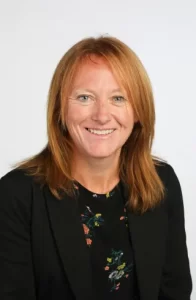
Sharon Tonner-Saunders - Scotland representative
Sharon Tonner-Saunders is lecturer in Technologies-ICT and Music in the School of Education at the University of Dundee. She joined the University in August 2008 after working for seven years as a primary school teacher, where the last four years were spent teaching ICT to all primary pupils. During this time, Sharon was awarded the British Council's eTwinning Award for Excellence due to using innovative methods to connect children with their peers around the world. This followed shortly with Sharon becoming a British Council Ambassador where she shares her knowledge and expertise of digital technologies and intercultural learning with educators around the world. Since 2018, Sharon has led an innovative intercultural project called Voices of the World (VOTW) that uses a range of communication forms (Music, Makaton and Art) and digital technologies to connect learners together to develop their intercultural awareness of others and preserve their linguistic identities. This project has won eTwinning Quality Labels from countries around Europe, the European eTwinning Quality Label and the prestigious British Council National eTwinning Award for best project in the UK (2019 and 2020).

Andy Connell
Andy Connell was Associate Professor and School of Education Director for External Relations (marketing, recruitment, digital media, social communications), University of Chester, until January 2025. He then retired from the university but remains active in research and writing. He also has a part time role tutoring and mentoring young people who are or were in the care system. Until January 2019 he was Head of Initial Teacher Education at the University of Chester, then led on education courses and CPD for teachers at University Centre Shrewsbury until October 2022. Andy is a Director and Former Chair of the Council for Subject Associations, Director for the Technology and Pedagogy and Education Association (TPEA) and Director for the Newman Catholic Collegiate Multi-Academy Company. He has been on a number of national subject expert groups for Computing and ICT, including groups drafting the Computing curriculum, Subject Knowledge Enhancement content and Initial teacher Education (ITE) content and on several advisory groups on Teacher Standards. He was previously at Keele University and Liverpool Hope University. Prior to moving into Higher Education, he was a teacher and Head of Computing and Business in secondary schools and taught in primary schools. He has edited and contributed to several books on teaching Computing and ICT and written guides to support teachers and teacher trainers of computing on behalf of Government Agencies. He still edits and writes on the teaching of computing. He regularly presents at conferences on the Pedagogy of Computing and on Managing Teacher Training. Andy is also researching into faith schools. Andy is a Senior Fellow of the Higher Education Academy, a Founding Fellow of The Chartered College for Teachers and an Honorary Member of the Technology, Pedagogy and Education Association.
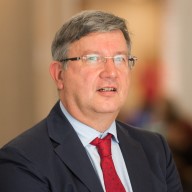
Andrew Csizmadia
Andrew is Senior Lecturer in Computer Science Education at Newman University Birmingham, where he teaches new computing teachers. He is also Subject Lead PGCE Secondary Computing and Subject Lead BSc Computer Science.
Andrew has a regional, national and international reputation as a computing education researcher. He has served as a member of both national and international working groups implementing computing, digital technologies, such as learning management systems, formative assessment digital repositories, eportfolios and educational robotics. Andrew has actively evaluating the impact of these technologies using both quantitative and qualitative research instruments and disseminating research findings through collaborative publications and conference presentations. Currently, Andrew is the Secretary of TPEA and serves on two academic journal and several international conference program committees reviewing the adoption and impact of digital technologies within educational establishments.

John Sibbald
John has nearly thirty years of experience teaching and leading in North Manchester secondary schools. Ten years were spent working at the North West Manchester City Learning Centre researching the effective use of new and emerging digital technologies and how these impact on teaching and learning. In April 2010 he joined the team at Manchester Communication Academy in Harpurhey, leading on the development of the new Computing curriculum, digital strategy and skills and staff effectiveness and performance in the use of technology.
Since leaving teaching in the Spring of 2017 he has been working with the following partners on developing digital strategy, remote learning and digital skills:
- Tute Education Ltd - creating a set of virtual teacher standards, developing lesson review protocols and improving online teacher effectiveness when delivering synchronous teaching and asynchronous learning.
- Greater Manchester Combined Authority - working with schools, colleges and industry on developing and evaluating a digital talent pipeline strategy.
- University of Salford and Create Education - evaluating the Morson Engineering Challenge, a 3D printing, additive manufacturing project in nine Salford secondary schools.
- The Ideas Foundation - supporting pupils in four secondary schools in creating resources for peers as part of a digital leadership framework. This includes digital critical literacy, digital resilience and digital curatorship.
- Manchester City Council High school audit. Working with thirty-six secondary and secondary SEND schools on evaluating and developing their digital offer - computer science, digital literacy, digital specialist and life skills.
In March 2020 the DfE EdTech Demonstrator programme was reconfigured to focus on remote provision of learning during lockdown with an additional 20 demonstrators being appointed. John approached The Manchester College and together they were successful in securing a demonstrator contract support to eighty schools and colleges in the North West of England. Phase 2 of the programme sees John moving to work with Oldham Sixth Form College helping schools apply digital technologies in the recovery phase.

Tarisai Chikomba
Dr Tarisai Chikomba is a Senior Lecturer at Anglia Ruskin University and has been involved in education for over 20 years, having taught computing in high school before moving to higher education. As a teacher Tarisai taught ICT and computing and was a CAS hub leader and computing CPD trainer. In higher education, Tarisai has been a computing ITT lecturer and has also been a master teacher trainer for computing before becoming a pre-service teacher lecturer. Working with the BCS, Tarisai was also an assessor on the computing teaching certificate that sought to upskill practising teachers in computing. Tarisai’s research interests are in computing, professional development of teachers in computing. Professionally, Tarisai is working on education technology and its application in various education contexts with a focus on the implications of artificial intelligence in education. Tarisai is also hoping to explore how edtech can also be used to encourage greater diversity in catering for people from different backgrounds.

Gavin Davenport
Gavin spent 7 years writing and designing video games for the likes of Atari before retraining as a primary teacher. He has taught in English primary schools for 18 years, alongside educational project management for a range of cultural charities and winning national awards for digital resource design. He has been a computing lead teacher in several schools and across a large multi academy trust in the North West, becoming a National Centre for Computing Education Senior PDL in 2023. He now lectures in primary education at Edge Hill university in Lancashire, leading computing across several courses and training routes. Gavin is a fellow of the Royal Society of Arts, a doctoral researcher at Liverpool John Moores University exploring the capital of digital literacy and subject specialism and has recently led a wide ranging commercial research project investigating the landscape of computing in Primary initial Teacher Education. He has worked as a consultant with a number of trusts and school partners on the improvement of primary computing and addressing the digital divide during Covid 19. Gavin’s interests lie in technology as a lever for social change and equity, and as a tool for creativity.

Warren Fearn
Warren worked earlier at Alias Wavefront learning 3D computer modeling and animation, becoming a Virtual Set Designer in the London BBC Virtual Reality Studios Department, and VFX post-production, winning several Promax awards and being nominated for an Emmy Award at the New York Festival. He set up his 3D practice creating 3D graphics for World Wildlife Funds, SKY, DHL, FELLOWES, NHS, and many more. His work branched out helping to develop new accredited curricula for NCFE and OCN in schools in 3D computer graphics and animation, leading to being a member of the Autodesk Secondary School Board advising on 3D technologies for schools. His work has been distributed on the Autodesk STEAM website (US and UK) to support schools, whilst exploring new pipelines for augmented experiences in education. Warren is currently an Associate Professor in Design at York St John University, focusing on Service Design approaches to extended realities (XR) within primary science education through a funded partnership with Epic Games (www.epic-science.com). He currently leads the postgraduate programmes in virtual and augmented reality, product, interior, and graphic design whilst establishing the York Virtual and Augmented Reality Research Group (www.vr-ar.group), and a Community Interest Company CIC (3DRWE) to support education using new immersive technologies at York St John University.

Si Poole
Dr. Si Poole serves as an Associate Professor of Cultural Education at the University of Chester, UK, and holds a Visiting Professorship at Gothenburg University, Sweden. As a trustee of the Mythstories museum and a Director at the Centre for Research into Education, Creativity, and Arts through Practice (RECAP), Dr. Poole's diverse interests span various cultural and educational domains. His extensive research, spanning 18 countries, explores the intersection of technologies with cultural processes and cultural education, including digital technologies. Dr. Poole's current endeavours delve into the intricate dynamics of gardening in education, creative pedagogy, walking methodologies, intercultural music usage, informal songwriting, and arts and crafts initiatives. Recently appointed as the custodian of the National Plant Collection of Mentha, Dr. Poole directs his scholarly inquiry towards understanding gardening as a form of creative praxis. Beyond academia, he wears many hats, including Managing Director of Soil Records, singer-songwriter with 'the loose kites,' and published poet and author.